
Renaming the State: From ‘West Bengal’ to ‘Paschim Banga’
Why in News?
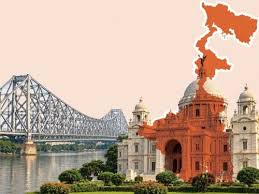
- On 23 November 2026, the West Bengal Cabinet approved a proposal to change the state’s English name from ‘West Bengal’ to ‘Paschim Banga’. The proposal seeks to bring the English name into line with the name commonly used in Bengali.
The Chief Minister announced that a resolution on the name change would be tabled in the Legislative Assembly on 9 December 2026. As of 24 November, the change was still at the proposal stage.
Earlier Attempts
- In 2011, ‘Paschim Banga’ was proposed as the state’s new name.
- In 2016, the Legislative Assembly proposed ‘Bangla’ in Bengali, ‘Bengal’ in English and ‘Bangal’ in Hindi.
- In 2018, the Legislative Assembly passed a resolution to adopt ‘Bangla’ in all three languages. The state’s official English name remained ‘West Bengal’.
Constitutional Procedure for Renaming a State
- Under Article 3(e), Parliament can change the name of a state by law. The state government or the Legislative Assembly may initiate a proposal to change the name.
- Before the Bill is introduced in Parliament, the President refers it to the legislature of the state concerned and sets a deadline for it to express its views. Those views are not binding on Parliament.
- Once the prescribed period has expired, the Bill may be introduced in either the Lok Sabha or the Rajya Sabha on the President’s recommendation. After both Houses pass it by a simple majority of members present and voting, the Bill is sent to the President for assent.
- Under Article 4, the same law may amend the First Schedule and, where necessary, the Fourth Schedule to give effect to the name change. The special amendment procedure under Article 368 does not apply.
Examples of State Renaming
- Uttaranchal to Uttarakhand — Uttaranchal (Alteration of Name) Act, 2006.
- Orissa to Odisha — Orissa (Alteration of Name) Act, 2011.
- Kerala to Keralam — Kerala (Alteration of Name) Act, 2026. It came into force on 25 August 2026.
Regional Identity and Federalism
- A state’s name reflects its linguistic and cultural identity. West Bengal’s proposal seeks official recognition in English for the name already in common use in Bengali.
- Both renaming and territorial reorganisation fall within the scope of Article 3. Renaming changes a state’s official name, while territorial reorganisation may alter its area or boundaries.
- Once the new name takes effect, government records, digital portals and existing laws must be updated to reflect it.
Key Facts
|
PRACTICS QUESTION
Question. Which of the following statements is correct regarding a Bill to change the name of a State under Article 3(e) of the Constitution?
(A) The Bill can be introduced only in the Lok Sabha.
(B) The President’s recommendation is required to introduce the Bill.
(C) The consent of the State Legislature concerned is mandatory.
(D) The Bill is passed by a special majority under Article 368.
Answer : (B)