
IIT Madras Develops 'Morphing Skin' Technology for Aircraft Wings
IIT Madras researchers have developed an innovative 'morphing skin' technology that dynamically reshapes aircraft wings during flight. The primary goal of this technology is to reduce stall risk, enhance lift, and improve the overall fuel efficiency of aircraft, making future aviation safer and more cost-effective.
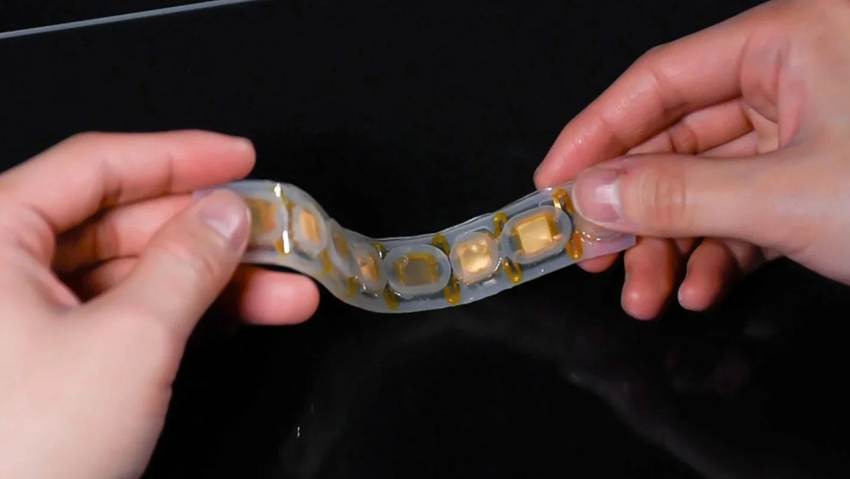
- Researchers at IIT Madras have developed a bird-inspired adaptive ‘morphing skin’ for aircraft wings. The technology can dynamically respond to airflow separation, potentially improving lift, reducing drag and enhancing flight safety and fuel efficiency.
Key Points:
- Researchers at the Indian Institute of Technology Madras (IIT Madras) have developed an adaptive “morphing skin” concept for aircraft wings, inspired by the ability of birds to adjust their flight behaviour.
- The technology uses an additional flexible wing assembly that can dynamically change its shape when airflow begins to separate from the wing.
- Aerodynamic stall occurs when airflow separates from a wing, causing a sudden reduction in lift and an increase in drag, potentially affecting an aircraft’s ability to remain airborne.
- The morphing skin responds to changing airflow and adjusts its shape to help maintain attached airflow over the wing.
- This could improve aircraft stability and control, particularly at higher angles of attack and during challenging flight conditions.
- The researchers combined computational modelling, wind-tunnel experiments and real-time shape-control mechanisms to test the concept.
- The system also incorporates Macro Fibre Composite (MFC) strips, which can sense and actuate changes in the wing’s shape.
- According to the research team, the technology can enhance lift while reducing drag, potentially improving fuel efficiency and reducing emissions.
- The technology could have applications in commercial aviation, particularly during take-offs and landings and in adverse flight conditions.
- In defence and high-performance aviation, adaptive wings could help maintain stable airflow during extreme manoeuvres and turbulence.
- The concept was tested on a 3D wing based on the NACA 4415 airfoil configuration.
- The researchers said the external skin could potentially be retrofitted onto existing aircraft, reducing the need for complete wing redesign.
What is a Macro Fiber Composite (MFC)?
- Macro Fiber Composite (MFC) is an advanced smart material used for sensing, actuation, and energy harvesting.
- It functions as a high-performance piezoelectric actuator and sensor, allowing it to detect and produce mechanical deformation.
- MFC technology was originally developed by NASA in 1999.
- It consists of rectangular piezoelectric ceramic fibers, generally made from Lead Zirconate Titanate (PZT).
- MFCs can convert electrical energy into mechanical motion and, in some applications, mechanical energy back into electrical energy.
- Because of these properties, MFCs are useful in aerospace, robotics, structural health monitoring, vibration control, and adaptive structures.
Practice Question
Q. With reference to the “morphing skin” technology developed by IIT Madras, consider the following statements:
It uses an adaptive external wing assembly to respond dynamically to airflow separation.
Macro Fibre Composite (MFC) strips incorporated into the system can both sense and actuate changes in wing shape.
The concept was tested on a 3D wing based on the NACA 4415 airfoil configuration and may have applications in both commercial and defence aviation.
MFC technology was originally developed by IIT Madras as part of this aircraft research.
Which of the statements given above are correct?
A. 1, 2 and 3 only
B. 1 and 4 only
C. 2, 3 and 4 only
D. 1, 2, 3 and 4
Answer: A. 1, 2 and 3 only
Explanation:
Statements 1, 2 and 3 are correct. IIT Madras developed the adaptive morphing skin, which responds to airflow separation. MFC strips can sense and actuate shape changes, and the concept was tested on a NACA 4415-based 3D wing with potential aviation applications. Statement 4 is incorrect: MFC technology was originally developed by NASA in 1999, not IIT Madras.
More Current Affairs - Daily
- Election Commission of India: Constitutional Design and Evolution into a Three-Member Body 12 Oct 2026
- Loknayak Jayaprakash Narayan: Total Revolution and Contribution to Democracy 12 Oct 2026
- India’s Russia-Ukraine Initiative: From Black Sea Security to Strategic Autonomy 12 Oct 2026
- Jayaprakash Narayan: Architect of Total Revolution and Defender of Democracy 12 Oct 2026