
Air Pollution : GRAP and Long-Term Solutions
Why in News?
The Commission for Air Quality Management (CAQM) lifted Stage III restrictions under the Graded Response Action Plan (GRAP) in Delhi–NCR. Measures under Stages I and II remained in force. The decision has renewed debate about the role of emergency restrictions and the need to reduce emissions throughout the year.
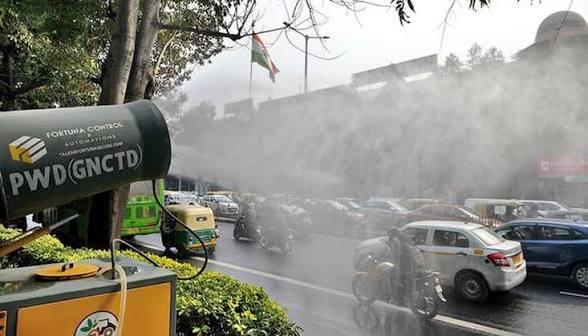
The Four Stages of GRAP
The Graded Response Action Plan (GRAP) sets out pollution control measures for the National Capital Region (NCR) based on Delhi’s Air Quality Index (AQI). The table below summarises the main measures under the plan revised in September 2026.
| Stage | Delhi’s AQI | Air Quality | Key Measures |
| I | 201–300 | Poor | Control dust at construction sites and on roads, prohibit open waste burning and regulate the operation of diesel generators. |
| II | 301–400 | Very Poor | Increase mechanised road sweeping and water sprinkling, and strengthen public transport services. |
| III | 401–450 | Severe | Restrict specified dust-generating construction and demolition activities. Restrict BS-III petrol and BS-IV diesel light four-wheelers in Delhi and certain NCR districts. |
| IV | Above 450 | Severe Plus | Restrict the entry of specified categories of trucks into Delhi. Extend construction restrictions to certain public infrastructure projects, such as highways. |
Notes
- When a higher stage is activated, measures under the preceding stages remain in force.
- Air quality forecasts can trigger measures under a stage before the AQI reaches the corresponding threshold.
Why Does Air Pollution Worsen in Winter?
- Major sources include vehicle and industrial emissions, road and construction dust, waste burning and crop residue burning. In winter, low wind speeds and temperature inversions limit the dispersal of pollutants.
- Gases such as sulphur dioxide and nitrogen oxides undergo atmospheric reactions that form secondary particles. Exposure to fine particulate matter (PM₂.₅) increases the risk of cardiovascular and respiratory diseases.
Role and Limitations of GRAP
- GRAP measures apply across the NCR based on Delhi’s AQI and air quality forecasts. The four stages range from road dust control to temporary restrictions on certain vehicles and construction activities during more severe episodes. Section 12 of the Commission for Air Quality Management Act, 2021, empowers the Commission to issue directions and coordinate action among the concerned states.
- Temporary restrictions can quickly reduce some emissions during severe pollution episodes. Suspending in-person classes can disrupt learning, and work stoppages can affect workers’ incomes. Regular action at the sources of pollution can reduce the need for repeated restrictions.
What Should Year-Round Action Include?
- Transport and industry — Expanding bus services between Delhi and neighbouring cities and integrating bus routes with the metro can reduce dependence on private vehicles. Industries need access to cleaner fuels, compliance with emission standards and monitoring of emissions from industrial stacks.
- Dust, waste and crop residue — Repairing damaged roads, covering construction materials and regularly removing debris can reduce dust. Regular waste collection helps curb open burning. To manage crop residue, farmers need timely access to machinery and buyers for the residue.
- Regional coordination and progress assessment — Pollutants cross administrative boundaries, so states should plan emission reductions across the shared airshed. The National Clean Air Programme (NCAP), launched in 2019, set a revised target of reducing PM₁₀ levels by up to 40% from the 2017–18 baseline or meeting the national standard by 2025–26.
Multiple-Choice Question
Question: With reference to air pollution control, consider the following statements.
- Under GRAP, measures for a particular stage can be implemented in advance across the NCR based on Delhi’s air quality forecast.
- The revised particulate pollution target under the National Clean Air Programme for 2025–26 was based on PM₂.₅.
- The Commission for Air Quality Management has the statutory power to coordinate pollution control measures taken by the concerned state governments.
Which of the statements given above are correct?
(A) 1 and 2 only
(B) 1 and 3 only
(C) 2 and 3 only
(D) 1, 2 and 3
Answer - (B)
Explanation: Statements 1 and 3 are correct. GRAP allows advance action based on air quality forecasts, and Section 12 of the 2021 Act gives the Commission the power to coordinate action. Statement 2 is incorrect because the revised target was based on PM₁₀.