
Current Affairs - Daily
26 November 2026
Beddome’s Bronzeback : A New Tree Snake of the Western Ghats
New Tree Snake Species Identified in the Western Ghats
Scientists have identified a new species of tree snake, Dendrelaphis beddomei, in India’s Western Ghats. It belongs to the family Colubridae. Some specimens had previously been mistaken for the large-eyed bronzeback (Dendrelaphis grandoculis), a closely related species. The scientific description of the new species was published in the journal Taprobanica on 12 November 2026.
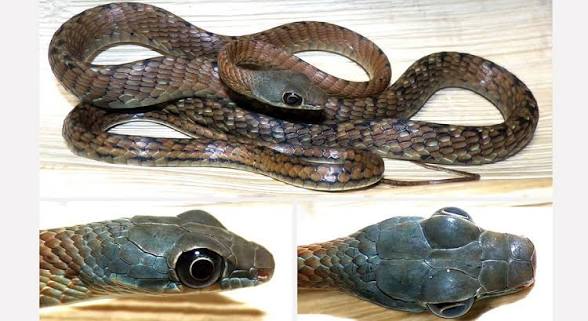
- The species was named after Colonel Richard Henry Beddome (1830–1911) in recognition of his contributions to the study of reptiles and amphibians in the Western Ghats. The researchers proposed Beddome’s bronzeback as its common name.
- They based their description on two adult males found dead on a road in January 2012 at Sullia in Karnataka’s Dakshina Kannada district. They also examined historical records, observed live snakes and studied photographs shared on citizen-science platforms.
- Beddome’s bronzeback is endemic to the Western Ghats. It mainly inhabits relatively open forests on the windward slopes, often at elevations below 500 metres above sea level. The large-eyed bronzeback generally occurs at higher elevations in dense evergreen and semi-evergreen forests. Both species have been recorded at Agumbe in Karnataka.
- Tongue colour helps distinguish the two species. Beddome’s bronzeback has a red tongue, while the large-eyed bronzeback has a black tongue. The new species also has more scales on the underside of its tail. The study provides a revised identification key for species of the genus Dendrelaphis found in southern India.
Practice Question
Question: Consider the following statements about Beddome’s bronzeback:
- It is a tree-dwelling snake endemic to the Western Ghats.
- Its principal habitat is dense evergreen forest at higher elevations.
- Its red tongue helps distinguish it from Dendrelaphis grandoculis.
Which of the statements given above are correct?
(a) 1 and 2 only
(b) 1 and 3 only
(c) 2 and 3 only
(d) 1, 2 and 3
Answer — (b)