
Current Affairs - Daily
25 November 2026
Religious Freedom and Public Order
Why in News?
- In an interim order dated 20 November 2026, the Supreme Court granted conditional, one-time permission to light a lamp on the stone pillar at Thirupparankundram Hill in Madurai, Tamil Nadu, for Karthigai Deepam on 24 November.
Claims concerning the right to perform religious rituals at the site and its ownership remained pending.
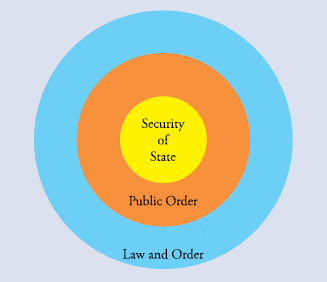
Religious Freedom and Public Order
- Article 25 guarantees all persons freedom of conscience and the right to profess, practise and propagate religion. These rights are subject to public order, morality, health and the other provisions of Part III of the Constitution.
- Article 26 gives religious denominations the right to manage their own affairs in matters of religion, subject to public order, morality and health.
- Article 14 guarantees equality before the law. Public order is Entry 1 of the State List in the Seventh Schedule.
Legal Basis for Monument Protection
- Article 49 requires the State to protect monuments, places and objects declared to be of national importance. Article 51A(f) makes it a fundamental duty of citizens to value and preserve the rich heritage of India’s composite culture.
- Under Section 16 of the Ancient Monuments and Archaeological Sites and Remains Act, 1958, a protected place of worship maintained by the Central Government must be used in a manner consistent with its religious character.
How Did the Court Balance These Concerns?
- Permission to light the lamp was limited to a team authorised by the temple administration. Public access to the lamp pillar, processions and gatherings at the site were prohibited.
- The Court directed that religious observances at customary locations and lawful religious activities at the dargah continue without interruption.
- The District Collector was tasked with coordinating the arrangements, the police with providing security and controlling access, and the Archaeological Survey of India (ASI) with setting conditions to protect the monument and its surroundings.
Administrative Impartiality
- The administration should hear all parties, assess risks on the basis of available evidence and apply the same standards in comparable circumstances.
- The duration, geographical extent and scope of restrictions should be proportionate to the actual risk. Stating the reasons for an order helps ensure accountability.
- In Madurai, the district administration imposed temporary restrictions under Section 163 of the Bharatiya Nagarik Suraksha Sanhita, 2023, while exempting activities necessary to implement the Supreme Court’s order.
Conclusion
- The Thirupparankundram case shows how limited permission proportionate to the risk, combined with clear conservation conditions, can respect religious faith while protecting public order and heritage.
PRACTICS QUESTION
Question. Which of the following pairs is incorrectly matched?
(A) Article 14 — Equality before the law
(B) Article 25 — Freedom of conscience and the right to profess, practise and propagate religion
(C) Article 26 — Right of religious denominations to manage their own affairs in matters of religion
(D) Public order — A subject in the Concurrent List of the Seventh Schedule
Answer : (D)
Public order is Entry 1 of the State List in the Seventh Schedule.