
SAMPADA Survey: India’s Anaemia Picture Looks Different
SAMPADA reports lower anaemia prevalence across several groups than earlier surveys, while underlining the importance of improved measurement, the predominance of mild cases and targeted nutrition and health interventions.
- Syllabus Mapping: GS Paper II — Health, Nutrition, Women and Child Development, Government Programmes and Public Health Surveillance.
- Source & Date: The Hindu, 24 November 2026.
Why in News?
The Health Ministry has released anaemia estimates from SAMPADA — Survey for Assessment of Markers of Population Health, Activity, Diet and Anthropometry.
The survey reports lower prevalence than earlier NFHS-5 estimates in several groups:
- children: about 41.8%, compared with 64%;
- women: about 56%, compared with 57%;
- pregnant women: about 44%, compared with 52%;
- men: about 19%, compared with 25%.
Why Are SAMPADA Figures Different?
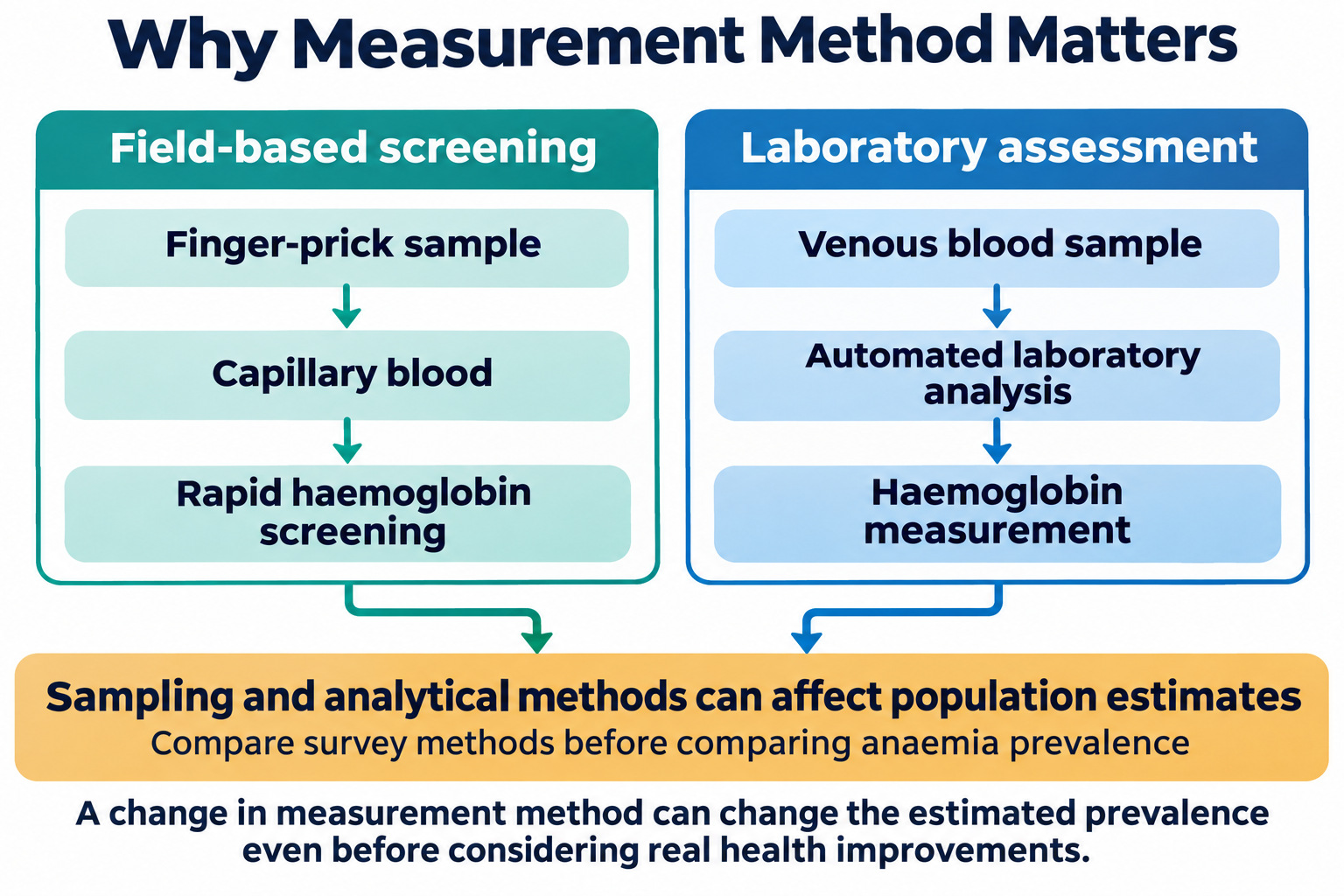
A major difference is the method of haemoglobin measurement.
- NFHS had relied on capillary blood obtained through a finger-prick test.
- SAMPADA uses venous blood sampling and automated laboratory analysers.
- The government shifted anaemia measurement out of NFHS partly because venous testing was considered more precise.
This means the difference between the two surveys should not automatically be interpreted as a pure fall in disease burden; measurement methodology also matters.
What Does the New Survey Show?
SAMPADA covered more than 2 lakh individuals, over 81,000 households and 183 districts across 35 States and Union Territories.
Reported prevalence included:
- 31% among children aged 5–9;
- 46% among adolescent girls;
- 55% among adult women up to 59 years;
- 56% among women above 60;
- 58% among lactating women.
A substantial share of cases was classified as mild anaemia, suggesting scope for early intervention before progression to moderate or severe disease.
Why Anaemia Remains a Major Public-Health Problem
Anaemia is not caused by one factor alone.
Important contributors include:
- inadequate iron intake;
- poor iron absorption;
- menstrual blood loss, including untreated menorrhagia;
- worm infestation;
- pregnancy-related nutritional demand;
- poor adherence to iron supplements.
Side effects such as nausea, gastritis and constipation can reduce compliance with iron-folic acid tablets. Social myths can further discourage regular use.
Policy Implications for Anaemia Mukt Bharat
The new data can help refine Anaemia Mukt Bharat.
Priority areas include:
- better adherence to iron and folic acid supplementation;
- regular deworming;
- counselling on side effects and myths;
- improved menstrual-health screening;
- stronger dietary diversification;
- targeted interventions for high-risk groups.
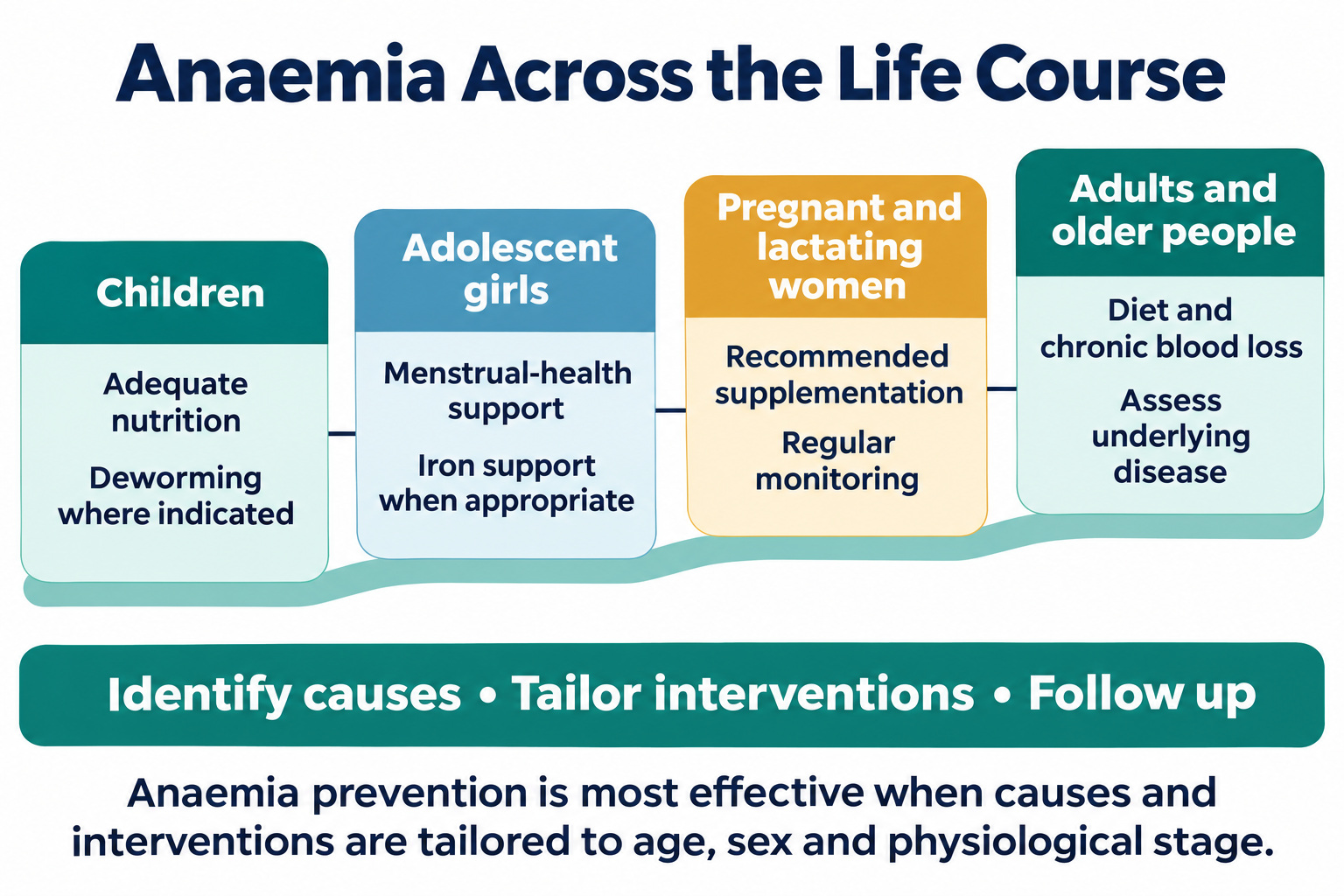
The findings also strengthen the case for population-specific rather than one-size-fits-all strategies.
Core Policy Lesson
SAMPADA suggests that India’s anaemia burden may be lower than earlier estimates in some groups, but it remains substantial.
The important lesson is methodological as well as epidemiological: better measurement can change the apparent scale of a health problem, while better policy still requires understanding its multiple causes.
India therefore needs both more accurate surveillance and a life-course strategy combining nutrition, supplementation, deworming, reproductive health and behavioural counselling.
---
Probable Mains Question
“Accurate measurement is as important as intervention in public-health policy.” Discuss with reference to the SAMPADA anaemia estimates and India’s strategy for combating anaemia.
---
Prelims Drill
MCQ 1
With reference to anaemia assessment, consider the following statements:
1. Venous blood sampling can be used for haemoglobin estimation.
2. Differences in sampling methodology can influence prevalence estimates.
3. Anaemia prevalence figures from different surveys are always directly comparable regardless of testing method.
Which of the statements given above are correct?
A. 1 only
B. 1 and 2 only
C. 2 and 3 only
D. 1, 2 and 3
Correct Answer: B
Explanation: Survey estimates can differ because of sampling and analytical methods. Therefore, direct comparison requires caution.
MCQ 2
Consider the following factors associated with anaemia:
1. Menstrual blood loss.
2. Worm infestation.
3. Poor dietary iron intake or absorption.
4. Pregnancy-related nutritional demand.
Which of the above can contribute to anaemia?
A. 1 and 2 only
B. 2 and 3 only
C. 1, 3 and 4 only
D. 1, 2, 3 and 4
Correct Answer: D
Explanation: Anaemia is multifactorial and may arise from nutritional deficiency, blood loss, parasitic infection and increased physiological demand.