
Refugee Crisis and Its Impact on Neighbours
Why in News?
On November 2026, the International Court of Justice (ICJ) ruled in The Gambia v. Myanmar that Myanmar committed genocide against the Rohingya during its 2017 military operations in northern Rakhine State. The ruling brought renewed attention to Myanmar’s accountability and the conditions needed for refugees to return safely.
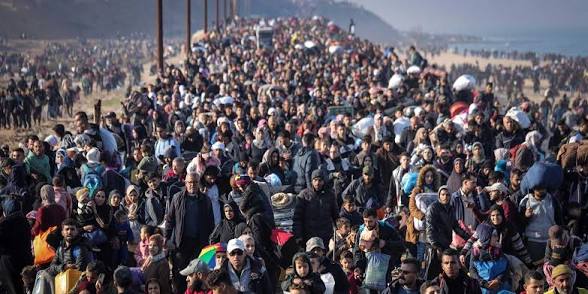
Displacement and Its Geography
- Following the 2017 military operations, large numbers of Rohingya fled Myanmar’s Rakhine State and crossed into Bangladesh. According to joint figures from the Government of Bangladesh and the United Nations High Commissioner for Refugees (UNHCR), Bangladesh hosted approximately 1.208 million Rohingya refugees as of 31 October 2026. Cox’s Bazar and Bhasan Char are their main areas of settlement in Bangladesh.
Impact on Host Countries
- A sudden influx increases demand for shelter, healthcare, education, drinking water and sanitation in border districts. In Cox’s Bazar, the expansion of relief operations also put pressure on land and forest resources.
- When displacement continues for years, host countries need to expand livelihood opportunities for both refugees and local communities. They also face challenges in managing borders and protecting refugees from human trafficking. The presence of Afghan refugees in Pakistan and Iran offers another example of this regional challenge.
India’s Role and Legal Position
- Under Operation Insaniyat (2017), India sent relief supplies to Bangladesh for Rohingya refugees. The arrival of displaced members of Myanmar’s Chin community in Mizoram illustrates how the crisis has also affected India’s border states.
- India is not a party to the 1951 Refugee Convention or its 1967 Protocol. The Immigration and Foreigners Act, 2025 regulates the entry, stay and registration of foreign nationals in India.
Key Concepts for Exams
- A refugee is someone who is outside their country and cannot or is unwilling to seek its protection because of a well-founded fear of persecution. An asylum seeker is someone whose claim for protection is pending.
- An internally displaced person (IDP) has been forced to flee but remains within their own country. The manner of crossing a border and the merits of a protection claim are assessed separately.
- Article 33 of the 1951 Refugee Convention sets out the principle of non-refoulement. It protects refugees against forcible return to a territory where persecution would threaten their life or freedom.
Regional Cooperation and Solutions
- Bangladesh and the United Nations’ Joint Response Plan (2025–26) addresses the needs of both refugees and host communities.
- China has mediated talks with Bangladesh and Myanmar on repatriation. A lasting solution requires international financial support for host countries and conditions in Myanmar that allow for safe, voluntary and dignified return.
PRACTICS QUESTION
Question. Consider the following statements regarding India’s refugee assistance and legal position.
1. Under Operation Insaniyat in 2017, India sent relief supplies to Bangladesh for Rohingya refugees.
2. India is a party to both the 1951 Refugee Convention and its 1967 Protocol.
Which of the statements given above is correct?
(A) 1 only
(B) 2 only
(C) Both 1 and 2
(D) Neither 1 nor 2
Answer : (A)