
Riemann Hypothesis
Why in News?
Mathematician Levent Alpöge announced that he had developed a proof of the Riemann Hypothesis with the help of the AI model Claude. He presented it as a formal proof in Lean, a proof assistant.
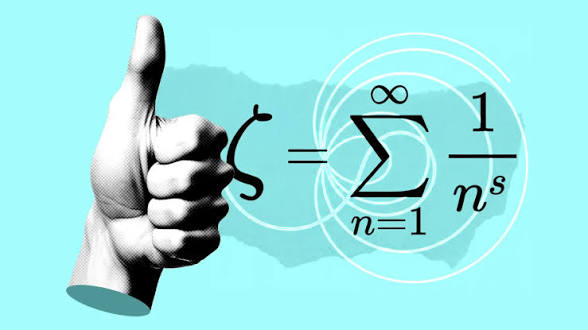
- After that experts associated with Lean and Mathlib reported that independent checking tools had confirmed the logical validity of the proof and verified that it established the correct mathematical statement of the Riemann Hypothesis. As of 23 November, the Clay Mathematics Institute still listed the problem as active.
What Is the Riemann Hypothesis?
- Connection with prime numbers — Prime numbers such as 2, 3, 5, 7 and 11 are integers greater than 1 with exactly two positive divisors. The gaps between consecutive primes vary. The prime number theorem approximates how many primes lie below a given limit. The Riemann Hypothesis helps explain how far the actual count can deviate from that estimate.
- Mathematical statement — German mathematician Bernhard Riemann proposed the hypothesis in 1859. It states that all non-trivial zeros of the Riemann zeta function have a real part of \(1/2\). A zero of a function is an input at which the function takes the value zero.
Lean’s Role and the Prize Rules
- Proof verification — In Lean, a mathematical statement and its proof are written in a form that a computer can check. Lean’s verification kernel checks that the conclusion follows from formal definitions, accepted axioms and rules of inference.
- Millennium Prize — The Riemann Hypothesis is one of the seven Millennium Prize Problems announced in 2000. A prize of US$1 million is offered for solving each problem. To be considered for the prize, a proposed solution must appear in a qualifying publication, at least two years must have passed since publication, and the solution must have gained broad acceptance in the mathematics community.
Multiple-Choice Question
Question: With reference to the Riemann Hypothesis, consider the following statements.
- Bernhard Riemann proposed the hypothesis in 1859.
- The hypothesis states that all non-trivial zeros of the Riemann zeta function have a real part of \(1/2\).
- Successful verification of a proof in Lean is sufficient by itself to qualify for the Millennium Prize.
Which of the statements given above are correct?
(A) 1 and 2 only
(B) 1 and 3 only
(C) 2 and 3 only
(D) 1, 2 and 3
Answer: (A)
Explanation: Statements 1 and 2 are correct. Statement 3 is incorrect because consideration for the Millennium Prize also requires publication in a qualifying outlet, a minimum of two years after publication and broad acceptance in the mathematics community.