
Landmine Crisis: Why the Global Ban Is Under Threat
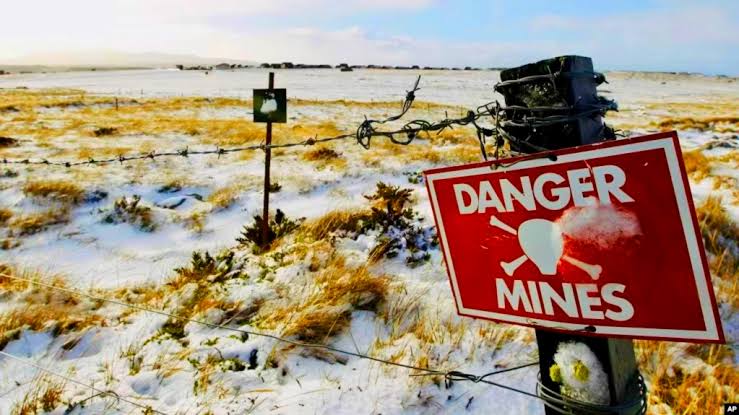
Landmine Monitor 2026 reports rising casualties from landmines and explosive remnants of war. Treaty withdrawals, renewed production plans and inadequate victim assistance are weakening decades of humanitarian progress.
- Syllabus Mapping: GS Paper II — International Relations, International Treaties, Disarmament, Humanitarian Institutions and Global Governance.
- Source : The Hindu ; Landmine Monitor 2026.
Why in News?
The Landmine Monitor 2026, published by the International Campaign to Ban Landmines (ICBL), recorded a five-year high in casualties.
- 6,929 people were killed or injured in 2025, approximately 10% more than in 2024.
- 84% of casualties with known civilian or military status were civilians.
- Children accounted for around half of civilian casualties where age was recorded.
The findings coincide with the first withdrawals from the global Mine Ban Treaty.
What Are Landmines and Explosive Remnants of War?
- Antipersonnel mines: Explosive devices designed to detonate through a person's presence, proximity or contact.
- Explosive Remnants of War (ERW): Unexploded or abandoned explosive ordnance remaining after military operations.
- Improvised mines: Homemade explosive devices triggered by a person's presence or action.
Unlike conventional weapons used against identifiable targets, landmines may remain dangerous for decades after fighting ends.
They obstruct agriculture, reconstruction, rehabilitation and safe civilian movement.
What Does the Ottawa Convention Provide?
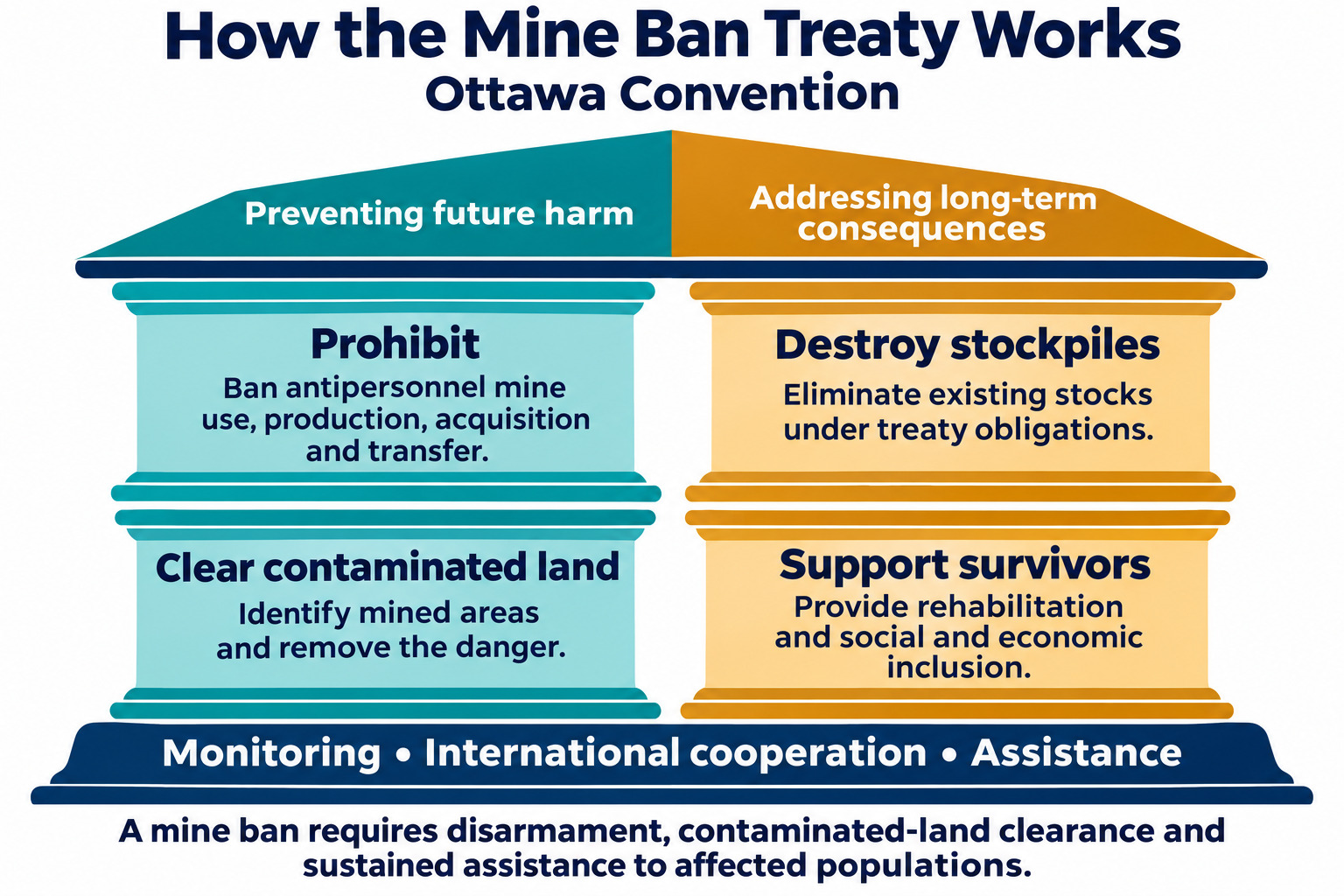
The 1997 Mine Ban Treaty, also called the Ottawa Convention, entered into force on March 1, 1999.
Its principal obligations include:
- prohibiting the use, production, stockpiling and transfer of antipersonnel mines;
- destroying stockpiles within four years;
- clearing mined areas within ten years, subject to permitted extensions;
- supporting victim assistance and international cooperation.
The treaty has 162 States Parties. India remains outside it.
The ICBL received the 1997 Nobel Peace Prize, together with campaign coordinator Jody Williams, for its role in advancing the ban.
Why Are Casualties Rising?
- Myanmar recorded the highest casualties for the third consecutive year.
- Syria: Returning populations increasingly encounter contaminated land.
- Afghanistan: Remains among the most affected treaty members.
- Improvised mines: Accounted for approximately 1,530 casualties in 2025.
At least 65 States and other areas were suspected or confirmed to face antipersonnel mine contamination or improvised-mine threats.
Clearance is difficult because improvised devices and unrecorded minefields may be hard to locate.
Why Is the Global Ban Under Threat?
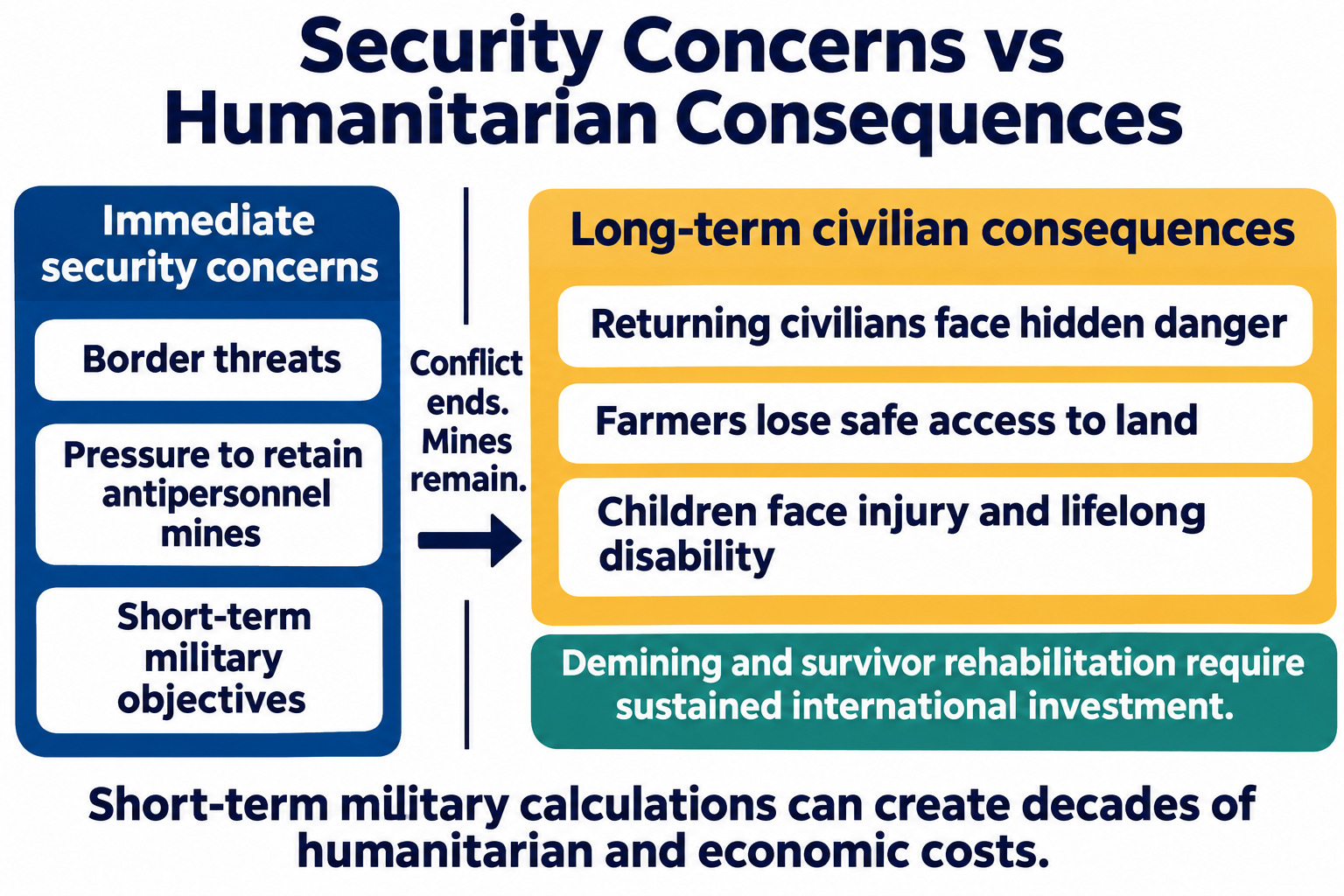
Five European countries — Estonia, Finland, Latvia, Lithuania and Poland — withdrew from the treaty between 2025 and early 2026.
They cited growing security threats associated with Russia and Belarus.
- Some have initiated steps towards renewed mine production.
- Ukraine's declared wartime suspension has been criticised as incompatible with the treaty.
- Withdrawals raise concerns about weakening the international norm against antipersonnel mines.
Under Article 20, withdrawal generally takes effect six months after notification, but is delayed if the withdrawing state is involved in armed conflict when that period ends.
India’s Position and the Core Policy Lesson
India is not a party to the Ottawa Convention. It has maintained security-related reservations about joining the comprehensive antipersonnel mine ban.
The report also identifies improvised-mine production by non-state armed groups in India.
Meanwhile, victim assistance received only about 5% of international mine-action funding, despite increasing casualties.
Core lesson: The landmine crisis reveals the tension between national security choices and international humanitarian protection.
Preventing future civilian casualties requires stronger treaty compliance, mine clearance, survivor rehabilitation and sustained financing.
---
Probable Mains Question
“The renewed use and production of antipersonnel landmines demonstrate the tension between national security and international humanitarian law.” Discuss with reference to the Ottawa Convention and India's position.
---
Prelims Drill
With reference to the Ottawa Convention, consider the following statements:
1. It prohibits the use, production, stockpiling and transfer of antipersonnel mines by States Parties.
2. It requires States Parties to destroy their stockpiles within a specified period.
3. India is a State Party to the Convention.
Which of the statements given above are correct?
A. 1 only
B. 1 and 2 only
C. 2 and 3 only
D. 1, 2 and 3
Correct Answer: B
Explanation: The Convention prohibits antipersonnel mines and requires stockpile destruction. India has not joined the treaty.