
India–France Space Cooperation : From Thumba to TRISHNA
Why in News?
The Indian Space Research Organisation (ISRO) participated in the International Space Summit held in Paris on 9–10 September 2026. The ISRO Chairperson spoke about the future of human spaceflight in low Earth orbit. The Indian delegation subsequently reviewed progress on an instrument for TRISHNA, a joint mission with France’s national space agency, CNES.
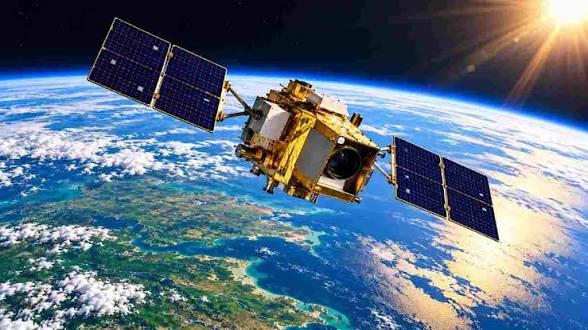
- India and France have emphasised closer cooperation in human spaceflight, advanced technology and engagement between their space industries. This has opened up opportunities for joint manufacturing in a partnership spanning more than six decades.
The Journey from Thumba to Kourou
- Beginnings in 1964 — India and France signed a protocol on cooperation in space research. French Centaure sounding rockets were used at Thumba in Kerala to study the upper atmosphere. The early sounding rocket programme helped India develop expertise in solid-propellant technology.
- Launch cooperation in both directions — In 1981, an Ariane rocket launched APPLE, India’s first indigenous experimental communications satellite, from Kourou in French Guiana. Ariane rockets have launched more than 20 Indian communications satellites. India’s Polar Satellite Launch Vehicle (PSLV) launched the French Earth observation satellites SPOT-6 and SPOT-7 in 2012 and 2014, respectively.
Major Joint Missions
- Megha-Tropiques, 2011 — This joint ISRO–CNES mission studied the water cycle and energy exchanges in the tropical atmosphere.
- SARAL-AltiKa, 2013 — This ocean observation mission used the AltiKa radar altimeter to measure sea surface height. These measurements helped scientists study ocean circulation.
- TRISHNA — The Thermal Infrared Imaging Satellite for High-Resolution Natural Resource Assessment is being developed to measure surface temperatures over land and in coastal areas. France will provide the thermal infrared instrument. India will provide the satellite platform and an optical sensor operating at visible and infrared wavelengths. The data will help estimate evapotranspiration and support irrigation and water resource management.
Industrial Cooperation and Space Safety
- India has more than 400 space start-ups. Joint design, technology transfer and domestic manufacturing can strengthen Indian companies’ ability to build and test satellite components.
- Growing orbital congestion and space debris increase the risk of satellite collisions. Sharing orbital data, reducing debris and protecting critical space infrastructure are key areas of cooperation for the peaceful and sustainable use of outer space.
Multiple-Choice Question
Question: With reference to joint India–France space missions, consider the following statements.
- Megha-Tropiques was designed to study the water cycle and energy exchanges in the tropics.
- The SARAL-AltiKa mission used a radar altimeter to measure sea surface height.
- For the TRISHNA mission, ISRO will provide the thermal infrared instrument, while CNES will provide the satellite platform.
Which of the statements given above are correct?
(A) 1 and 2 only
(B) 1 and 3 only
(C) 2 and 3 only
(D) 1, 2 and 3
Answer: (A)
Explanation: Statements 1 and 2 are correct. Megha-Tropiques studied the tropical water cycle and energy exchanges, while SARAL-AltiKa measured sea surface height. Statement 3 reverses the roles of the two agencies. CNES will provide the thermal infrared instrument, and ISRO will provide the satellite platform.