
COP31 Talks End in Deadlock
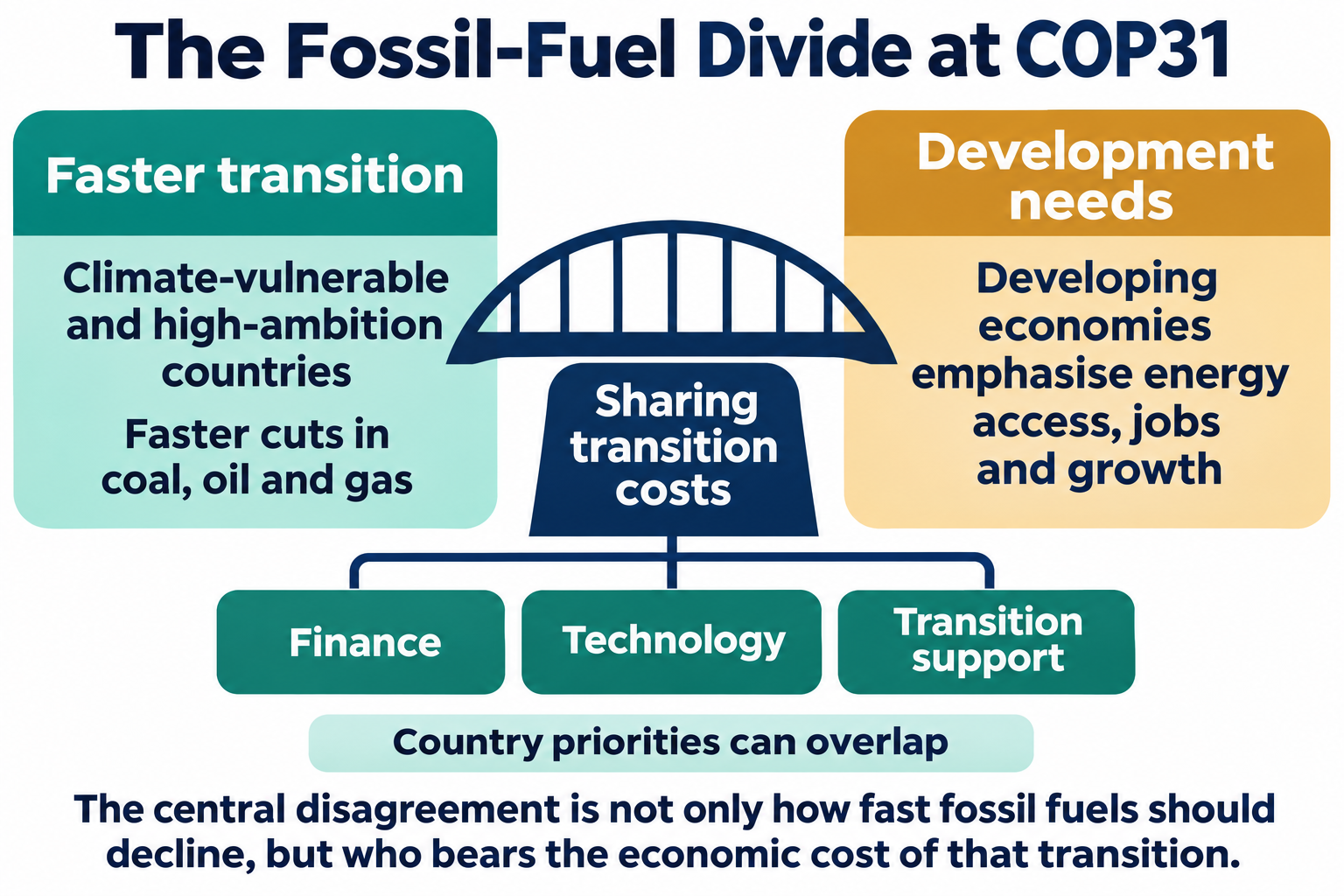
The COP31 dispute was not only about fossil fuels, but also about who bears the cost of transition, how much finance and technology developing countries receive, and how historical responsibility should shape climate action.
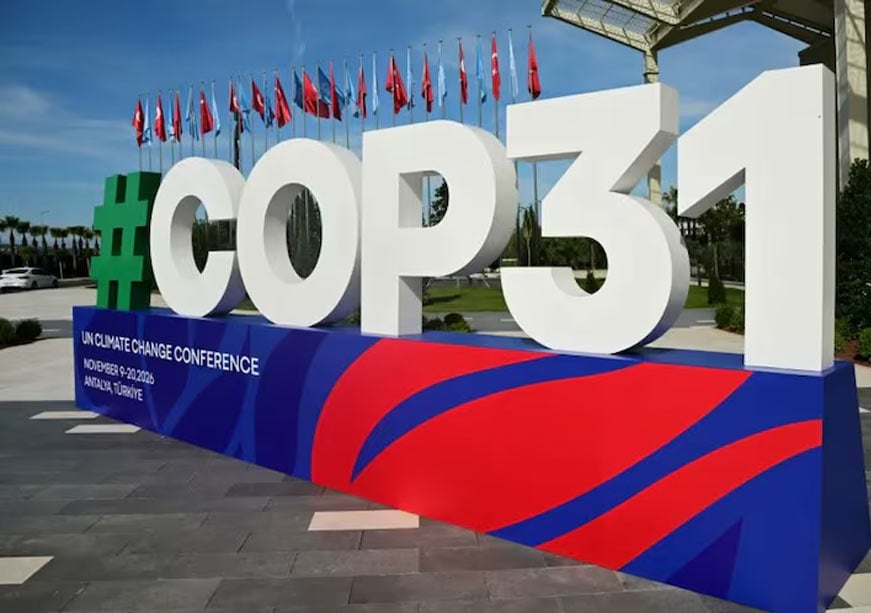
- Syllabus Mapping: GS Paper III — Environment, Climate Change, International Environmental Agreements, Energy Transition and Sustainable Development.
- Source & Date: The Hindu, 23 November 2026.
Why in News?
COP31 in Antalya, Türkiye, ended without consensus on an overarching political agreement after negotiations ran about 48 hours into overtime.
The central disagreement was whether the final cover decision should explicitly commit countries to phase out or move away from fossil fuels. The European Union and many other countries rejected a text without stronger language, while India, China, Saudi Arabia and other developing countries stressed equity and means of implementation.
Why Fossil Fuels Became the Main Fault Line
- Fossil fuels remain the largest source of greenhouse-gas emissions, making their future central to keeping warming close to 1.5°C.
- The EU and several vulnerable countries argued that omitting clear fossil-fuel language weakened earlier climate commitments.
- Some countries also criticised excessive reliance on technologies such as carbon capture, utilisation and storage, arguing that these should not substitute for deep emission cuts.
The disagreement reflects a wider tension between rapid global decarbonisation and national concerns over energy security, development and affordability.
India’s Position: Ambition Must Be Matched by Support
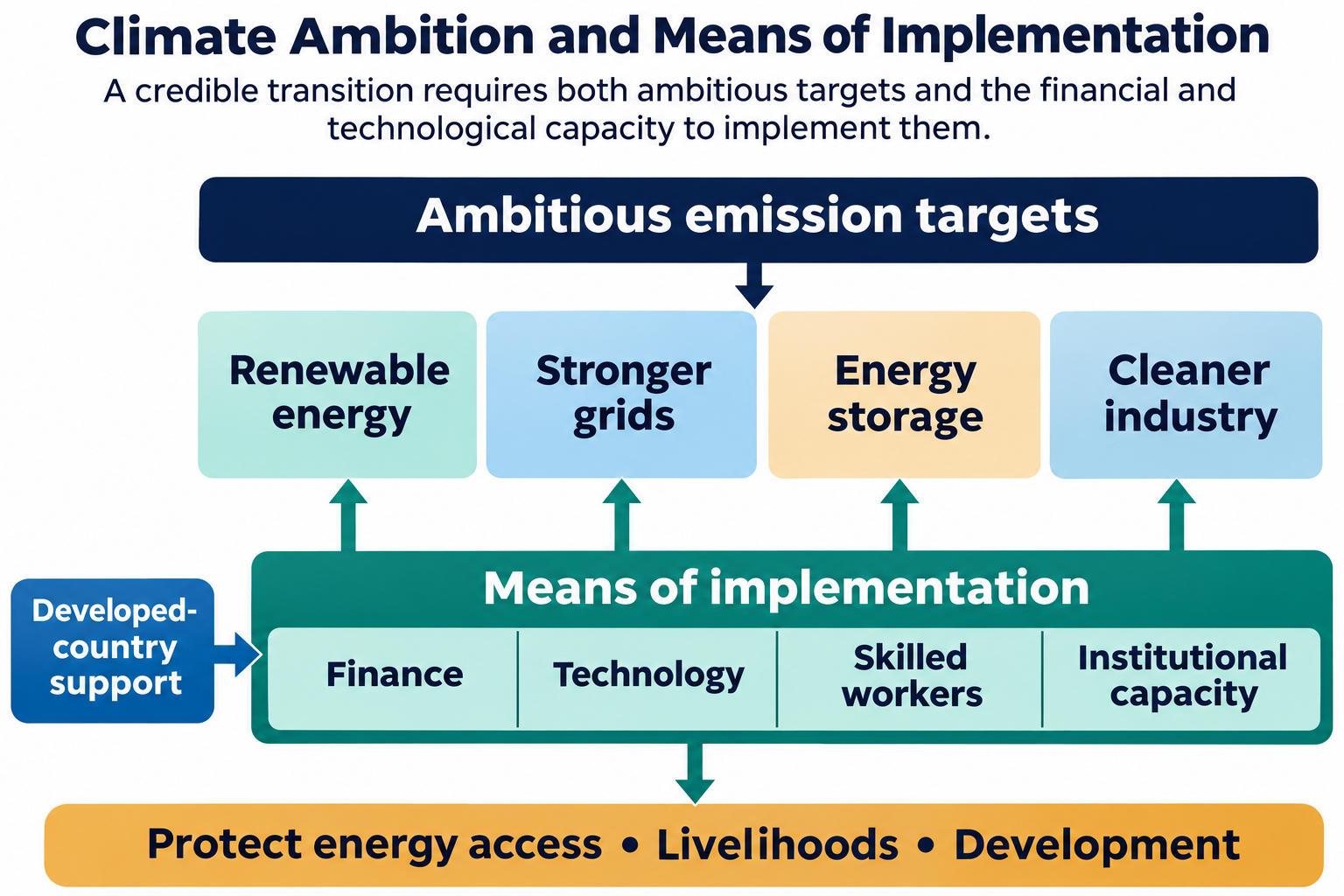
India supported moving forward with the proposed text while stressing that climate ambition must be accompanied by finance, technology and capacity-building.
Its position emphasised:
- nationally determined energy transitions;
- protection of development and livelihood needs;
- adequate adaptation finance;
- greater recognition of historical responsibility;
- stronger application of equity and Common But Differentiated Responsibilities and Respective Capabilities.
For India and the Like-Minded Developing Countries, identical obligations can be inequitable because countries have contributed very differently to historical emissions and possess unequal financial capacities.
Why Historical Responsibility Matters
The concept of a limited global carbon budget is central to this debate.
- Industrialised countries used a large share of the carbon space during their development.
- Developing countries entered industrialisation later and still need energy for poverty reduction, infrastructure and employment.
- If all countries are now expected to decarbonise at the same pace without adequate support, developing countries argue that historical inequality is effectively ignored.
Thus, climate justice concerns both future emissions and past use of atmospheric space.
Why Consensus Makes COP Negotiations Difficult
UN climate decisions generally operate through consensus among more than 190 parties.
This means:
- there is no conventional majority vote for major political outcomes;
- even a large coalition cannot simply impose its preferred text;
- final language often reflects the lowest level acceptable to all parties.
This protects smaller and developing countries from domination by powerful states, but it can also slow collective action when interests diverge sharply.
Core Policy Lesson
COP31 exposed the core dilemma of global climate politics: decarbonisation must accelerate, but the transition cannot be separated from equity, finance and development.
For India, the challenge is to expand renewable energy and reduce long-term fossil-fuel dependence without accepting a transition framework that ignores historical emissions or places disproportionate costs on developing economies.
The credibility of future climate agreements will therefore depend on combining strong mitigation with predictable finance, technology transfer, adaptation support and a genuinely just transition.
---
Probable Mains Question
“The global debate on fossil-fuel phase-out is as much about climate justice and burden-sharing as it is about emission reduction.” Discuss with reference to the divisions witnessed at COP31.
---
Prelims Drill
MCQ 1
With reference to the principle of Common But Differentiated Responsibilities and Respective Capabilities, consider the following statements:
1. It recognises that all countries have responsibilities towards environmental protection.
2. It allows differences in obligations based on historical responsibility and national capabilities.
3. It requires identical emission-reduction obligations for all countries.
Which of the statements given above are correct?
A. 1 only
B. 1 and 2 only
C. 2 and 3 only
D. 1, 2 and 3
Correct Answer: B
Explanation: The principle recognises common responsibility but differentiates expectations according to differing historical contributions and capacities.
MCQ 2
Consider the following statements regarding climate COP decisions:
1. Major political outcomes are generally adopted through consensus.
2. A large numerical majority can always impose a cover decision on dissenting parties.
3. Consensus can protect national interests but may also slow ambitious collective action.
Which of the statements given above are correct?
A. 1 only
B. 1 and 3 only
C. 2 and 3 only
D. 1, 2 and 3
Correct Answer: B
Explanation: Consensus requires broad acceptance among parties; therefore, numerical majority alone is generally insufficient to impose a major COP political outcome.