
How Can Census 2027 Count Caste Without Leaving Any Community Out?
How Can Census 2027 Count Caste Without Leaving Any Community Out?
The name of a single caste may be pronounced or spelled differently across districts. At the same time, several castes may use the same surname. The Census needs to distinguish between these two situations.
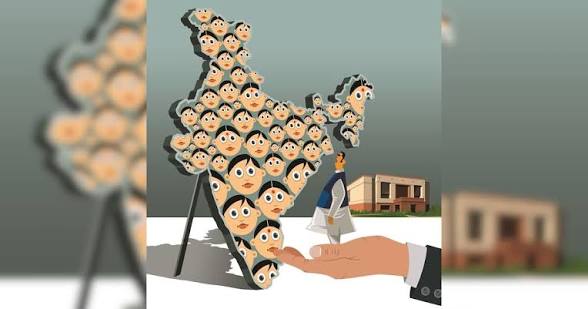
- In the first, one community may be split across several entries. In the second, distinct communities may be mistakenly grouped together. The reliability of caste data in Census 2027 will depend on how the recorded names are classified.
How Will Caste Be Recorded in the Census?
- Question 10 of the notified questionnaire for the second phase of Census 2027, known as Population Enumeration, covers Scheduled Castes, Scheduled Tribes and caste. Scheduled Castes (SCs) and Scheduled Tribes (STs) will be identified using notified lists.
- People from other communities will state their caste name in their own words, and the enumerator will record it. This open-entry format will allow local names to be captured. The challenge will be to determine which names refer to the same community and which should be kept separate.
What Can We Learn From the 2011 Exercise?
- The Socio-Economic and Caste Census, 2011, conducted separately from the regular Census, returned about 46.73 lakh distinct caste-related entries. These included caste and sub-caste names, surnames, gotras and alternative names for the same community. The caste data were not published.
- Bihar and Telangana used predefined lists and codes in their own surveys. Bihar’s 2023 survey found that Backward Classes and Extremely Backward Classes together accounted for about 63% of the population. The initial findings of Telangana’s survey put the share of Backward Classes at 56.33%. Any comparison of these figures needs to account for the two states’ classification methods and categories.
- Classification also affects representation. In 1932, Dr B. R. Ambedkar questioned the definitions and estimates used to determine the population of the then-designated Depressed Classes before the Lothian Committee.
- Population estimates were important in determining political representation at the time. Today, whether a community is counted or left out still affects how clearly its circumstances are understood by policymakers.
Record Caste Names and Administrative Categories Separately
- Under Article 342A, states and Union Territories may maintain their own lists of socially and educationally backward classes. Entries in these lists may differ from those in the Central List. The same community may therefore have a different status under the state and central lists.
- A practical approach would be to preserve the caste name as reported by the respondent. A standardised caste code could be recorded alongside it, with separate fields for the state and central classifications wherever the match is clear. The name recorded in the Census should not automatically determine a person’s eligibility for reservation.
How Can the Data Be Made More Reliable?
- State-wise code directories should include local caste names, common spelling variants and sub-castes. Entries that cannot be matched confidently should be set aside for expert review.
- The method should be tested across linguistic regions, and the rules used to classify entries should be published with the aggregate results. Protecting the confidentiality of individual Census records is equally important.
- Reliable caste-wise figures, read alongside data on education, employment, assets and representation in public services, can help clarify the circumstances of different communities.
- This evidence can inform decisions on which groups benefit from reservation for backward classes, what additional indicators are needed to review the creamy layer criteria, and what evidence is required for the sub-classification of Scheduled Castes.
- The value of the Census will depend on how inclusively it counts communities and how readily its findings can be scrutinised.
Question: Consider the following statements regarding Article 342A of the Constitution of India.
- States and Union Territories may, by law, prepare and maintain a list of socially and educationally backward classes for their own purposes.
- All entries in such a State or Union Territory list must be identical to those in the Central List.
Which of the statements given above is correct?
(A) 1 only (B) 2 only (C) Both 1 and 2 (D) Neither 1 nor 2
Answer: (A)
Explanation: Article 342A(3) allows States and Union Territories to maintain lists for their own purposes. Their entries may differ from those in the Central List. This is why recording a person’s self-reported caste name separately from the relevant administrative category has been suggested. A caste name recorded in the Census does not automatically determine eligibility for reservation.