
Carbon Capture at COP31 and India’s ₹20,000 Crore CCUS Plan
Why In News?
At the United Nations climate conference (COP31) in Antalya, Türkiye, in November 2026, countries disagreed over the role of industrial carbon capture and the future of fossil fuels. Saudi Arabia and other oil-producing countries supported technologies that capture carbon dioxide from industrial emissions. The European Union and climate-vulnerable countries expressed concern that excessive reliance on these technologies could delay efforts to reduce coal, oil and gas consumption. The conference ended on 22 November without agreement on an overarching decision.
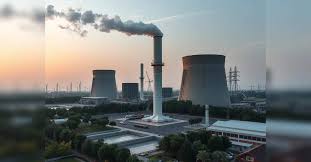
How Does CCUS Work?
- Carbon capture, utilisation and storage (CCUS) refers to a group of technologies that separate carbon dioxide (CO₂) from gases released by power plants and industrial facilities. The captured CO₂ can be used on-site or compressed and transported by pipeline, ship, rail or truck.
- For geological storage, CO₂ is injected into suitable rock formations deep underground. These include porous rocks saturated with saline water and depleted oil and gas reservoirs. An overlying rock layer with low permeability helps prevent CO₂ from migrating towards the surface. Safe storage requires careful site selection and long-term monitoring.
What Determines the Climate Benefit?
- Captured CO₂ can be used to make synthetic fuels, chemicals and construction materials. Burning a synthetic fuel releases its carbon back into the atmosphere as CO₂. In some construction materials, carbon can remain bound in stable minerals for long periods. The net emissions benefit therefore depends on the energy used in production, how long the carbon remains stored and which conventional product is replaced.
- Cement production illustrates why carbon capture matters. To produce clinker, manufacturers heat limestone. The calcium carbonate in the limestone decomposes and releases CO₂. Even when the kiln runs on clean energy, this chemical reaction still produces CO₂. CCUS can capture these process emissions.
India’s Five-Year Budget Proposal
- The Union Budget 2026–27 proposed a total outlay of ₹20,000 crore over five years to support CCUS in five sectors: power, steel, cement, oil refining and chemicals. The aim is to prepare these technologies for practical use across the five industries. In May 2025, India launched its first cluster of five facilities for testing carbon capture and utilisation technologies in the cement industry.
Practice Question
Question: With reference to carbon capture, utilisation and storage (CCUS), consider the following statements.
- CCUS can capture the CO₂ released by the thermal decomposition of limestone during cement production.
- The carbon in a synthetic fuel made from captured CO₂ remains permanently stored even after the fuel is burned.
- Suitable deep saline aquifers can be used for the geological storage of CO₂.
Which of the statements given above are correct?
(A) 1 and 2 only (B) 1 and 3 only (C) 2 and 3 only (D) 1, 2 and 3
Answer - (B)
Explanation : CO₂ released during limestone decomposition can be captured and stored in suitable deep saline aquifers. Statement 2 is incorrect because burning a synthetic fuel releases its carbon back into the atmosphere as CO₂.