
Dalai Lama’s Escape: From Nehru’s Dilemma to India-China Tensions
The Dalai Lama's arrival in India during the 1959 Tibetan uprising created a major diplomatic dilemma for Jawaharlal Nehru, forcing India to balance humanitarian asylum, relations with China and Himalayan security.
- Syllabus Mapping: GS Paper I — Post-Independence Consolidation; GS Paper II — India-China Relations, Neighbourhood Policy, Border Security and Refugee Diplomacy.
- Source: The Indian Express
Why in News?
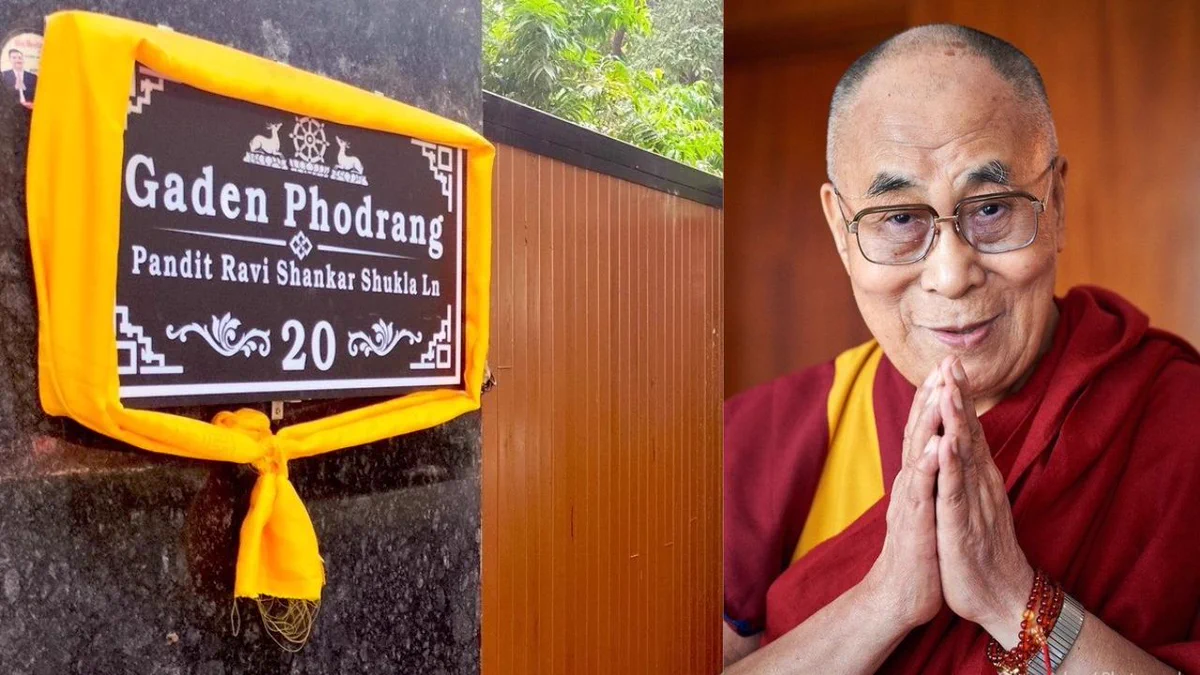
The Indian government has reportedly allotted a bungalow in central Delhi to the 14th Dalai Lama, reviving interest in his historic arrival in India in 1959.
- India has hosted the Tibetan spiritual leader for nearly seven decades.
- His succession has become an emerging issue in India-China relations, with Beijing seeking influence over the selection process.
- The developments highlight the continuing diplomatic importance of Tibet.
Tibet’s Historical and Strategic Significance
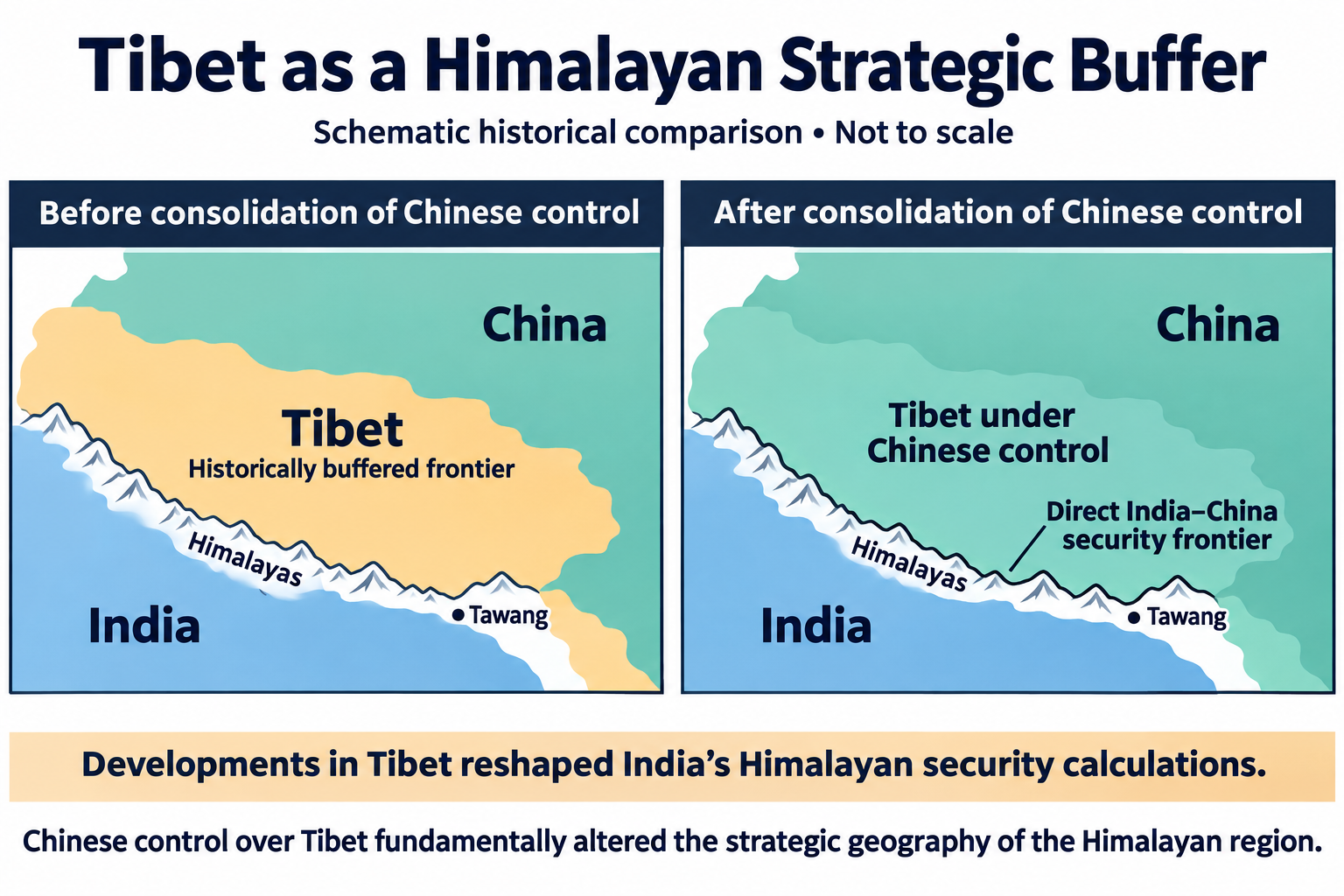
Tibet historically functioned as a geographical buffer between India and China, although its political status and historical relationship with China remain disputed.
- 1950: Chinese forces entered Tibet and consolidated military control.
- 1951: The Seventeen-Point Agreement formally recognised Chinese sovereignty while promising Tibetan autonomy. The Dalai Lama later maintained that it had been signed under coercion.
- 1954: India and China concluded their agreement on trade and intercourse with the Tibet region, associated with the principles of Panchsheel.
China regarded Tibet as essential to territorial integrity, while India was concerned about the security implications of Chinese control over the Himalayan frontier.
How Did the Dalai Lama Reach India in 1959?
Growing resentment against Chinese rule culminated in the March 1959 Tibetan uprising.
- March 17: The Dalai Lama escaped from Lhasa with family members, guards and Tibetan companions.
- Tibetan fighters helped escort him through difficult Himalayan terrain.
- March 31: He entered India near Khinzemane in the Tawang region, now part of Arunachal Pradesh.
- April 1: India formally accepted his asylum request.
Thousands of Tibetan refugees subsequently entered India, creating a long-term humanitarian and diplomatic responsibility.
Why Was Nehru’s Decision Difficult?
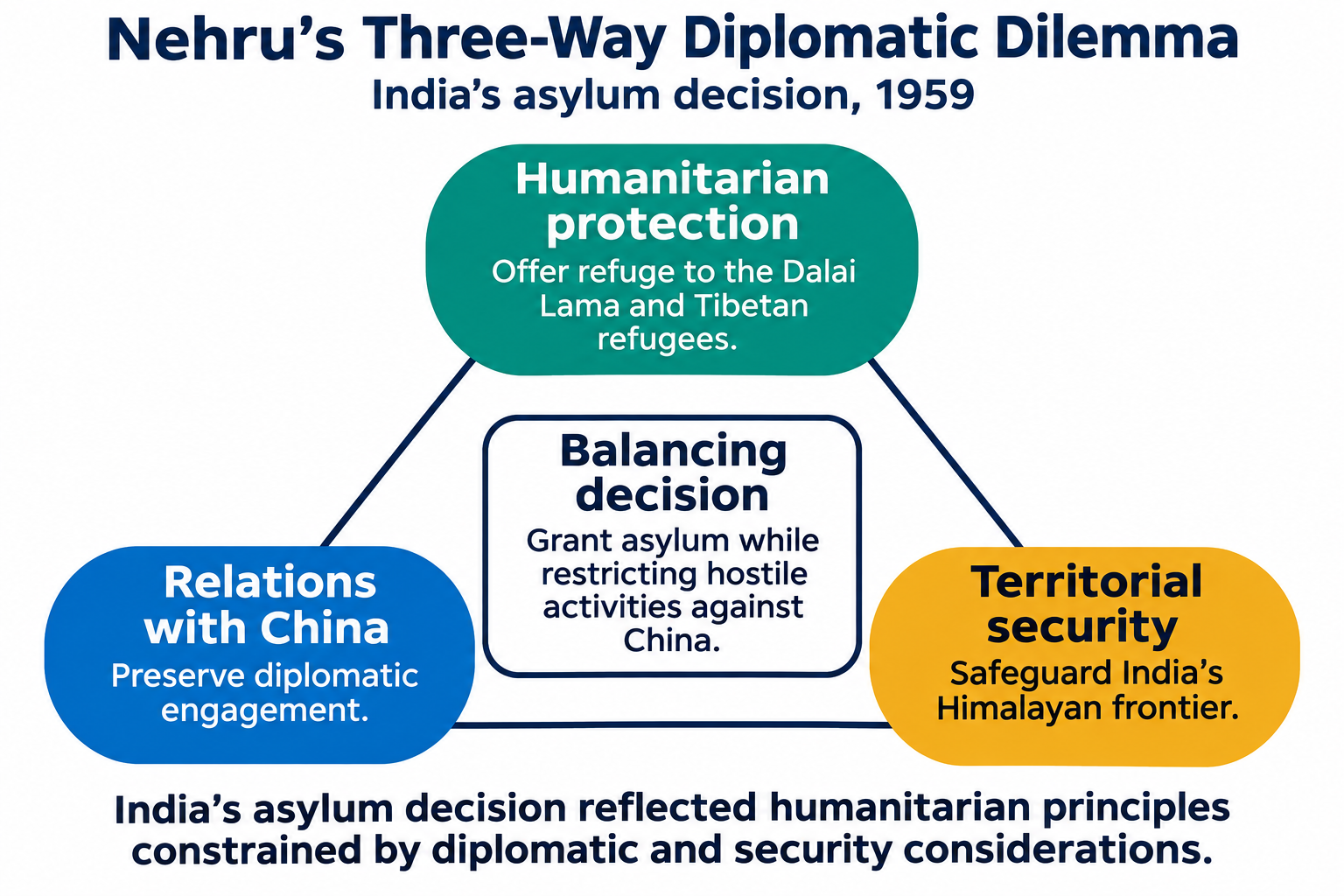
Prime Minister Jawaharlal Nehru faced competing considerations:
- Humanitarian responsibility: Providing refuge to a persecuted spiritual leader and displaced Tibetans.
- Diplomatic concerns: Avoiding direct confrontation with China, with which India had sought friendly relations.
- Security concerns: Preventing Indian territory from becoming a base for activities directed against China.
Nehru accepted the Dalai Lama's asylum while maintaining that Tibetan refugees should not use India for hostile political or military activities against China.
In an August 1960 letter, he acknowledged that providing asylum had generated considerable bilateral friction.
How Did the Tibetan Crisis Affect India-China Relations?
The crisis exposed deeper differences between Indian and Chinese strategic perceptions.
- Nehru initially expected cooperation between two newly independent Asian powers.
- Sardar Vallabhbhai Patel's 1950 warning had already highlighted concerns about China's expanding influence along the Himalayan frontier.
- China viewed India's asylum decision with suspicion, while India increasingly questioned Chinese intentions in Tibet.
The Tibetan issue, together with unresolved boundary disputes and worsening mistrust, contributed to the deterioration that culminated in the 1962 India-China War.
Core Historical Lesson
The Dalai Lama's escape illustrates how humanitarian decisions can produce long-term geopolitical consequences.
India's decision established a lasting tradition of Tibetan refuge, but also added a sensitive dimension to relations with China.
The continuing question of the Dalai Lama's succession shows that historical disputes involving identity, sovereignty and borders can remain strategically relevant across generations.
---
Probable Mains Question
“India's decision to grant asylum to the Dalai Lama in 1959 reflected the tension between humanitarian responsibility and geopolitical realism.” Examine its historical context and implications for India-China relations.
---
Prelims Drill
Consider the following statements:
1. Tibet historically served as a strategic buffer between India and China.
2. The 1954 India-China agreement concerning Tibet was associated with the Panchsheel principles.
3. The Dalai Lama's arrival in India was the sole cause of the 1962 India-China War.
Which of the statements given above are correct?
A. 1 and 2 only
B. 2 and 3 only
C. 1 and 3 only
D. 1, 2 and 3
Correct Answer: A
Explanation: Tibet's strategic location and the 1954 Panchsheel agreement are historically significant. The 1962 war resulted from multiple factors, particularly boundary disputes and deteriorating bilateral trust, rather than asylum alone.