
UPSC Preparation: Coaching vs Self-Study vs Online Learning
Avdhesh Kumar · 17 November 2026 · RWA Civils Services
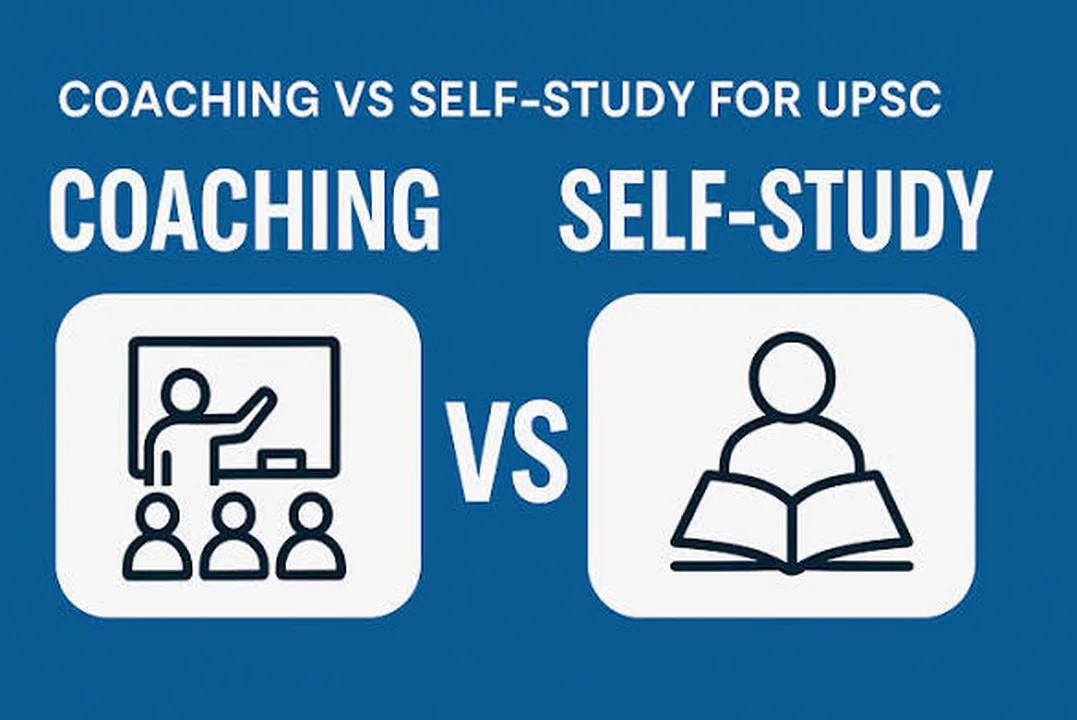
How Should You Prepare for UPSC? Comparison of Coaching, Self-Study and Online Learning
The Union Public Service Commission (UPSC) Civil Services Examination is a route into public service for hundreds of thousands of young people in India. Many candidates spend years preparing for selection to the IAS, IPS, Indian Foreign Service and other central services. They invest time and money in study materials, guidance, test series and accommodation.
How useful is it to enrol in a coaching institute, and under what circumstances might self-study or online learning be a better choice? Answering this question requires an understanding of the official exam structure, educational research and the study resources available to candidates.
A certificate from a coaching institute is not required for selection through the UPSC Civil Services Examination. Anyone who meets the Commission’s eligibility conditions can apply independently. Preparing without guidance, however, can be easier for some candidates than for others. Educational background, family circumstances, financial resources, study discipline and the ability to identify mistakes all affect preparation. Candidates can therefore start by asking which parts of preparation they can manage on their own, given their time and budget, and where they need help.
What the UPSC 2025 Results Reveal About the Competition
On 6 March 2026, the Press Information Bureau (PIB) released the following figures for the Civil Services Examination 2025.
Stage of the examination | Number of candidates |
| Total applications | 9,37,876 |
| Appeared for the Preliminary Examination | 5,76,793 |
| Qualified for the Main Examination | 14,161 |
| Qualified for the Personality Test | 2,736 |
| Finally recommended | 958 |
| Share of candidates who appeared for Prelims and were recommended | Approximately 0.17% |
Source — Press Information Bureau, Civil Services Examination 2025 results. The percentage was calculated from the official figures.
For every 1,000 candidates who appeared for the Preliminary Examination, about 1.66 were recommended for appointment. This is an overall ratio for the examination. An individual candidate’s prospects also depend on their preparation and performance.
The official figures do not record how candidates prepared. They show the level of competition, while a comparison of selection rates for coaching, self-study and online learning would require separate data. These results also provide no basis for estimating the advantage of buying more study materials or enrolling in coaching.
The Three Stages of the UPSC Exam and What Each Demands
Under the official UPSC examination structure, the Preliminary Examination consists of two compulsory objective papers worth 200 marks each. Candidates must score at least 33% in General Studies Paper II, commonly known as CSAT.
The Main Examination consists of descriptive papers. Seven papers in the Main Examination account for 1,750 marks, and the Personality Test accounts for another 275 marks. Together, they determine the final merit ranking. Preliminary Examination marks are excluded from the final ranking.
This structure requires candidates to develop three types of abilities.
- Knowledge and understanding — Understand concepts in subjects such as history, geography, polity, economics and the environment.
- Analysis and written expression — Use relevant facts, arguments and examples to address what a question asks in the Main Examination.
- Qualities assessed in the Personality Test — Demonstrate balanced judgement, clarity of thought and an understanding of situations during the interview.
For example, after watching ten lectures on federalism, a candidate can test their preparation by writing a 150-word analytical answer on Centre–State relations. Checking whether the answer addresses the question and uses relevant arguments and examples shows how well the candidate can apply what they learned from the lectures.
When Is Coaching Useful? The Role of Regular Guidance and Individual Assessment
The main potential benefit of coaching is structured instruction. Candidates who are just starting may find it difficult to make sense of the extensive syllabus and decide which topics to prioritise. Teachers can help them plan their studies, understand difficult concepts and review their progress.
A research synthesis by the UK’s Education Endowment Foundation (EEF) found that approaches which help learners plan, monitor and evaluate their learning can be effective. These approaches are associated with metacognition and self-regulated learning. The EEF estimates that they lead to the equivalent of about eight additional months of academic progress on average.
This estimate comes mainly from studies in school education. For UPSC preparation, the research illustrates how a teacher can help candidates decide which topics to prioritise, check their understanding and correct recurring mistakes.
The usefulness of coaching also depends on how much individual support candidates receive. An institute may hold regular classes for a large batch, while still finding it difficult to give every student enough time for questions and feedback on written answers. Even after an institute completes the syllabus, candidates need practice and assessment to check how well they have mastered it. When choosing a coaching programme, candidates should therefore consider the quality of instruction, how questions are addressed, how answers are assessed and what feedback they receive.
Two Techniques That Make Self-Study More Effective
Self-study allows candidates to work around their schedules and learn at their own pace. Its effectiveness depends on how they practise what they have studied.
In 2013, psychologist John Dunlosky and his colleagues reviewed ten widely used learning techniques. The review, published in Psychological Science in the Public Interest, identified two techniques as particularly useful.
- Practice testing — Recall what you have studied without looking at your books or notes, and answer questions to check your understanding.
- Distributed practice — Spread practice and revision across several days instead of spending one long session on a topic.
The review rated techniques such as rereading and highlighting important passages as having comparatively limited utility.
For example, after studying a chapter on inflation, one candidate might reread it three times. Another might close the book after understanding the concept, write down the causes of inflation, answer objective questions and practise again a few days later. The research suggests that the second approach, which combines practice testing with spaced revision, may help the candidate remember the material for longer.
When Does Online Learning Help? From Digital Access to Exam Practice
Online learning can give candidates in small towns and rural areas access to recorded classes, digital books and test programmes. Recorded classes are also convenient for those preparing alongside a job or other responsibilities.
An online resource can be assessed at three levels. First, can the candidate access the material? Second, can they understand it? Third, can they apply what they have learned to unfamiliar questions? A course with 500 hours of recorded lectures tells candidates how much material is available. Their progress can be assessed by how well they answer questions on the topics covered.
The sheer volume of online material can also take up study time. Watching several teachers explain the same topic may leave less time for question practice and revision. Working with a defined set of resources and adding regular practice and assessment can help candidates get more out of online classes.
Low-Cost Preparation Resources from NCERT, SWAYAM and UPSC
- NCERT’s ePathshala — Launched in 2015, the initiative provides textbooks, audio, video and other educational materials. Candidates can access them on a phone, tablet or computer.
- The Ministry of Education’s SWAYAM platform — Many courses offered by higher education institutions are available free of charge. A separate fee may apply for the certification examination.
- UPSC previous years’ question papers — The Commission publishes Preliminary and Main Examination papers on its website. These include the 2026 General Studies, Essay and optional subject papers.
These resources give candidates access to foundational textbooks and help them understand what actual exam questions demand. The need for individual guidance can be assessed separately. A digital textbook may be enough to study a topic, while feedback from a teacher or evaluator may help a candidate assess the quality of an answer on that topic.
How to Improve Through Test Series by Reviewing Scores and Mistakes
A test series offers practice under exam-like conditions and helps candidates identify weaknesses. If a candidate gets 60 out of 100 questions correct, the number gives an indication of performance. Reviewing the remaining questions helps the candidate decide what to study next.
Mistakes can have different causes. A candidate may have missed a fact, misunderstood a concept, misread the question or made an incorrect guess. Identifying the cause makes it easier to choose a way to improve. Missing facts call for revision, while recurring misreading calls for closer attention to question wording during timed practice.
For the Main Examination, candidates should review the relevance, structure, reasoning, examples and timing of their answers. When choosing a test series, it helps to see whether the evaluation provides specific feedback that they can use to improve.
How to Assess Selection Claims in Coaching Advertisements
Coaching institutes often publish the ranks and photographs of successful candidates. Calculating an institute’s selection rate requires both the number of candidates selected and the total number enrolled.
Suppose 100 out of 20,000 students at one institute are selected. Its selection rate in this example would be 0.5%. If 50 out of 1,000 students at another institute are selected, its rate would be 5%. These figures are illustrative.
It also matters what kind of support a successful candidate received from an institute. A candidate might take classes at one institute, join a test series at another and receive interview guidance from a third. The same candidate could then appear in advertisements for several institutes.
When assessing an advertisement, look at three things. How many students enrolled? Which programme did the selected candidates use? What individual assessment did that programme provide? These details put the advertised selection figures in context.
How to Calculate the Full Cost of Preparation
The cost of classroom coaching can extend beyond course fees. If candidates move to another city, they may also pay for accommodation, food and transport. Self-study can save several of these expenses. Online learning can reduce the need to commute or relocate.
The value of paying for guidance depends on the candidate’s needs. If the fundamentals of a subject remain unclear after repeated study, a teacher’s help may save study time.
Opportunity cost also matters. If a working candidate leaves a job to attend full-time coaching, the total cost includes the income they give up during that period, along with course fees and living expenses. When budgeting, candidates should compare the full cost, the time available for study and lower-cost alternatives.
The Hybrid Model — Combining Self-Study With Targeted Guidance
In a hybrid approach, candidates study the basic syllabus independently, seek expert help with difficult areas and check their progress through regular tests. Coaching and online classes can be used to meet specific needs.
For example, a candidate may study history, geography and polity using NCERT textbooks and standard books. They may take online classes to understand difficult concepts in economics and have their Main Examination answers assessed by an external evaluator. This concentrates spending on the areas where they need support.
The practical benefits of this approach include a flexible schedule, targeted guidance and greater control over spending. Determining whether it produces a higher UPSC selection rate than other approaches would require direct comparative evidence.
How to Choose a Preparation Method That Fits Your Circumstances
Candidate’s circumstances | Possible study strategy |
| Starting preparation for the first time | Review the syllabus and previous years’ papers. Begin with foundational self-study and seek guidance where needed. |
| Preparing alongside a job | Use recorded online classes and set aside fixed hours for question practice. |
| Working with a limited budget | Use government digital resources, standard books and a few carefully chosen tests. |
| Facing repeated difficulty in the Main Examination | Practise answer writing regularly and have your answers assessed by an expert. |
| Struggling with concepts in a specific subject | Take targeted classes or seek guidance from a teacher in that subject. |
| Already covered the syllabus | Prioritise revision, previous years’ question papers and a review of your performance. |
These are practical options. Candidates can choose a strategy based on the difficulty they face and the time they have available.
How to Build Practice, Revision and Review Into a Weekly Study Plan
Begin with the official syllabus and previous years’ question papers. These help you understand the scope of each subject, the types of questions asked and the level of preparation expected. Then study the foundational books, prepare topic-wise notes and schedule time for revision.
The review by Dunlosky and his colleagues supports recalling and writing down what you have studied without looking at your notes, using questions to check your understanding and revising at intervals. The EEF research synthesis also highlights the value of planning your studies, tracking progress and reviewing weaknesses.
Use four questions to apply these principles to your weekly study plan.
- Which topics did I study this week?
- How many questions could I answer without looking at my notes?
- Which concepts or question types led to repeated mistakes?
- What should I revise, practise or have assessed next week?
This review lets candidates track progress in understanding, recall and answer writing alongside the hours they spend studying.
Conclusion — How to Choose the Most Suitable UPSC Preparation Method
The official UPSC results show how competitive the examination is. Comparing selection rates across coaching, self-study and online learning would require data on how candidates prepared.
Educational research supports regular practice testing, spaced revision and reviewing your own progress. Candidates can use these techniques with any preparation method. Resources from NCERT, SWAYAM and UPSC provide a low-cost starting point. A teacher’s guidance can help with difficult concepts and with assessing answers for the Main Examination.
Choose a method based on your learning needs, budget and available time. After a few weeks, check whether you can recall what you studied, apply it to exam questions and make fewer of the mistakes you identified earlier.